
Italian Pork Braciole
Italian pork braciole is made with thin slices of pork shoulder rolled around prosciutto, garlicky broccoli rabe, and sharp provolone, then braised in tomato sauce until fork-tender.
Servings: 6 servings
Calories: 289kcal
Cost: $15
Equipment
- 1 medium dutch oven
- 1 cooking twine
Ingredients
- 4 ¼ inch slices boneless pork shoulder
- 4 oz prosciutto
- 1 teaspoon salt
- ½ tsp black pepper
Stuffing
- 1 cup Broccoli rabe, chopped
- ½ cup breadcrumbs
- 2 cloves garlic, minced
- ¼ cup pine nuts, chopped
- 2 tablespoon extra virgin olive oil
- ½ cup sharp provolone, grated
- 2 tablespoon fresh parsley, chopped
Braising Sauce
- 2 tablespoon extra virgin olive oil
- ½ onion, chopped
- 2 cloves garlic, minced
- 1 tablespoon tomato paste
- ½ cup white wine
- 1 28 oz can crushed tomatoes
- 1 teaspoon salt
Instructions
- In a bowl, combine the cooked and drained broccoli rabe, breadcrumbs, garlic, pine nuts, grated provolone, parsley, and olive oil. Mix until the breadcrumbs resemble wet sand. Add another 1-2 teaspoons of olive oil if necessary to reach the desired texture.

- Lay the pork shoulder slices flat and tenderize them with a meat mallet. Place one slice of prosciutto on each piece of pork.

- Divide the stuffing evenly among the slices and press it flat onto the pork slices.
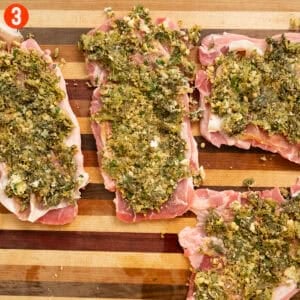
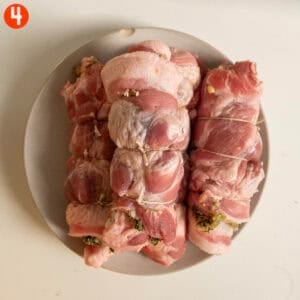
- Roll up each slice of pork and tie it securely with kitchen twine. Season the outside of the rolls with 1 teaspoon of salt and ½ teaspoon of black pepper.
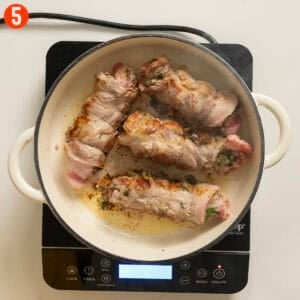
- Heat 2 tablespoons of olive oil in a large oven-safe pan (with a lid for later) over medium-high heat. Sear the rolls until golden brown on all sides, about 60–90 seconds per side. Transfer the rolls to a plate and reduce the heat to medium-low.
- Preheat the oven to 325°F. Add the onions to the same pan and sauté for 6–8 minutes, until softened. Add the garlic and sauté for 1 minute. Stir in the tomato paste and cook for 2 minutes, until it darkens slightly.
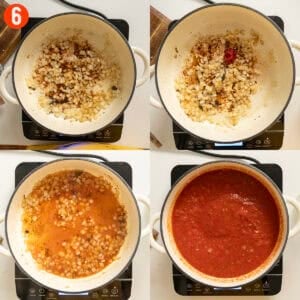
- Pour in the white wine and bring it to a simmer. Use a wooden spoon to scrape up the browned bits from the bottom of the pan. Simmer until the wine has reduced by half. Stir in the crushed tomatoes and 1 teaspoon of salt, and bring the sauce to a simmer.
- Return the pork rolls to the pan, and cover with the lid.
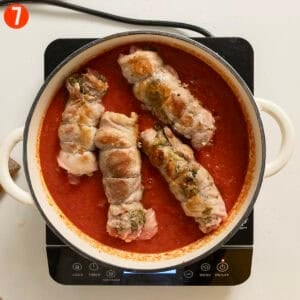
- Transfer the covered pan to the oven and braise for 2 to 2½ hours, until the pork is fork-tender. Remove the twine and serve the braciole with the sauce.

Notes
- Buy pre-sliced pork shoulder for a smaller batch. If you’re cooking for six people or fewer, save yourself some prep and ask the butcher for boneless pork shoulder slices about ¼ inch thick.
- Pound the pork before stuffing it. Use a meat mallet to flatten each slice evenly and widen it so there’s enough room for the filling and the pork is easier to roll.
- Check the sauce level before braising. Once the rolls are in the pan, the sauce should come about halfway up their sides. Cover the pan before transferring it to the oven.
- Skim the sauce before serving. Pork shoulder releases some fat as it braises. Use a spoon to skim any excess fat from the surface before tossing the sauce with pasta.
Nutrition
Calories: 289kcal | Carbohydrates: 10g | Protein: 8g | Fat: 24g | Saturated Fat: 6g | Polyunsaturated Fat: 4g | Monounsaturated Fat: 12g | Trans Fat: 0.02g | Cholesterol: 20mg | Sodium: 1267mg | Potassium: 184mg | Fiber: 1g | Sugar: 2g | Vitamin A: 434IU | Vitamin C: 5mg | Calcium: 119mg | Iron: 1mg
