

Spaghetti Carbonara is a classic Roman-Italian Dish with a creamy, silky smooth sauce made with 5 ingredients: spaghetti, guanciale, Pecorino Romano, eggs, and pepper. While 5 ingredients make this recipe appear simple, it is a difficult dish to master. Check out my Spaghetti Carbonara Do's and Don'ts guide for beginners to start understanding how to make an authentic carbonara.
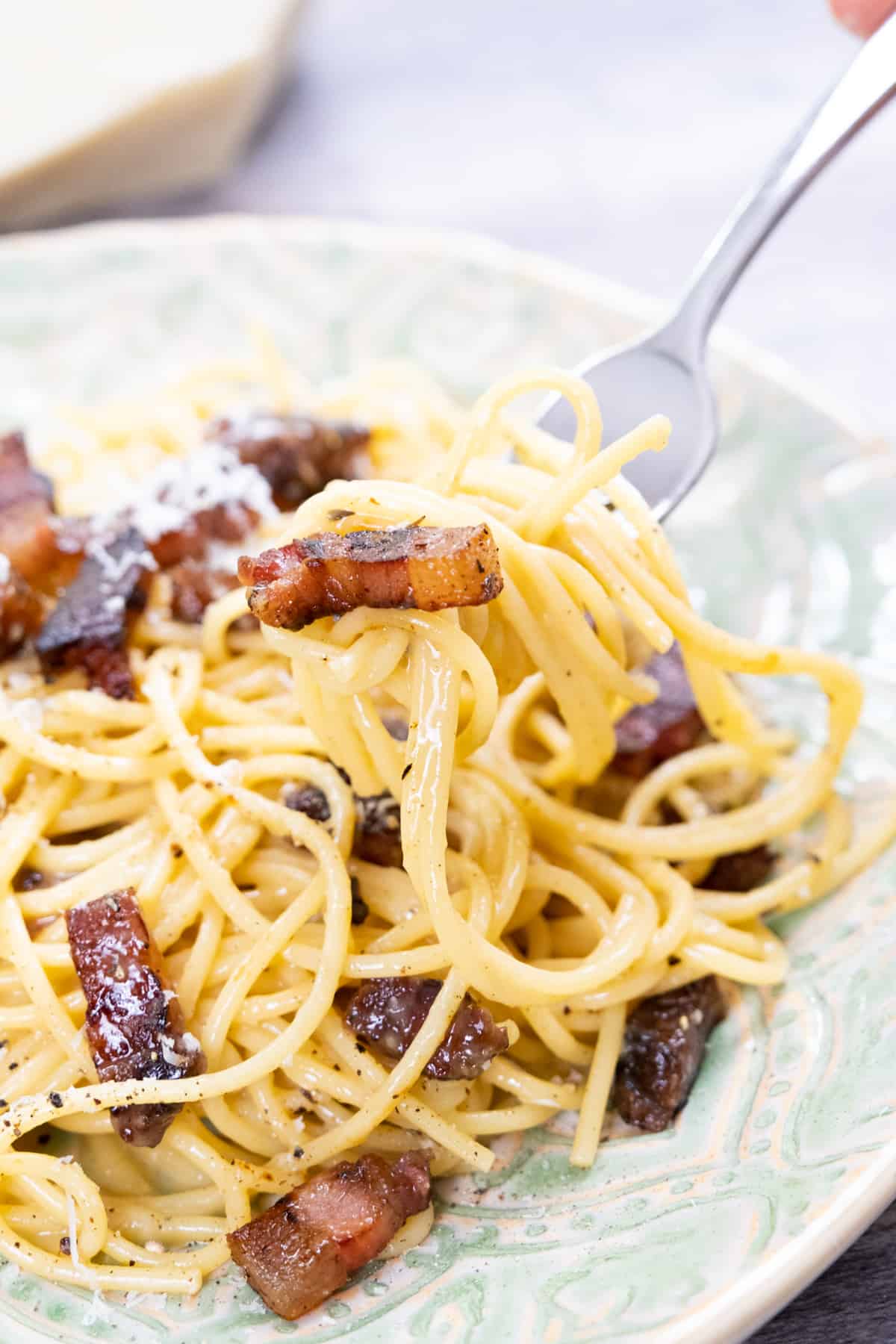
Check out more Classic Roman Pasta dishes like Pasta Alla Gricia and Bucatini Amatriciana
A Quick Look at The Guide
- ✅Recipe Name: Spaghetti Carbonara
- ⏲️Ready in: 30 minutes
- 👪Makes: 4 servings
- 📋Main ingredients: spaghetti, guanciale, Pecorino Romano, egg, pepper, and starchy pasta water.
- ⭐Why You'll Love This Guide for Beginners: This guide to troubleshooting and making an authentic pasta carbonara will help you learn how to make carbonara while also teaching you how to correct common mistakes along the way.
Jump to:
- A Quick Look at The Guide
- My Trials and Tribulations
- Carbonara Troubleshooting Guide: Watery, dry, clumpy, or scrambled
- Ingredient Notes and Substitutions
- How to Make Spaghetti Carbonara
- Pro-Tips
- Spaghetti Carbonara Do's
- Spaghetti Carbonara Don'ts
- Carbonara with Guanciale vs. Pancetta
- Why Carbonara gets Clumpy
- Other Carbonara Mistakes
- Recipe FAQs
- More Classic Italian Dishes
- Spaghetti Carbonara
- Reviews
My Trials and Tribulations
I'm not sure if you've heard of the spaghetti carbonara police. But I think they operate internationally and will immediately inform you of any mistakes you make when creating a spaghetti carbonara plate. So, I want to frame this recipe into a spaghetti carbonara do's and don'ts so you can feel good about your dish if you're a beginner like I once was.
It is a dish that everyone screws up the first time. It's not an easy recipe and takes some time to learn the technique. So, I thought I'd share my experience with carbonara. The very first time I made this dish, I started with bacon. Don't ask me why, but I've come a long way since then.
I've tested this recipe over and over again, and what I hope to provide you with are some tips and tricks that will help you make this Roman Classic perfectly. Hopefully, this guide to Carbonara will help you get there faster!
Carbonara Troubleshooting Guide: Watery, dry, clumpy, or scrambled
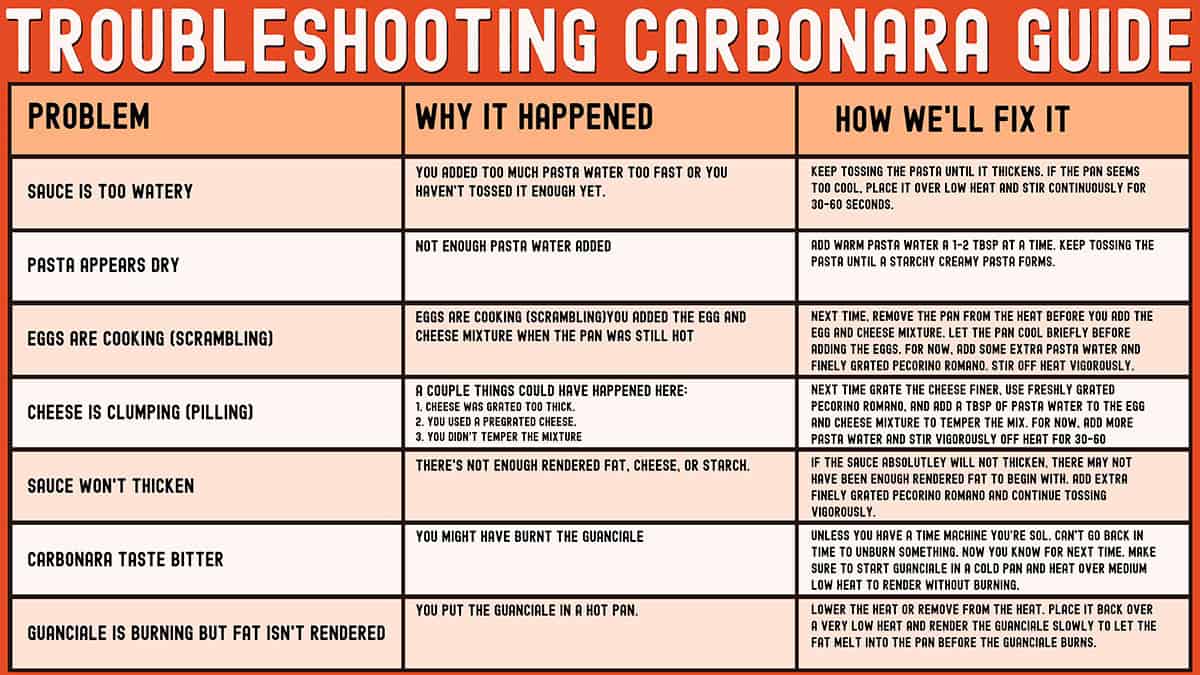
Check out the above guide to easily correct some common mistakes!
Ingredient Notes and Substitutions
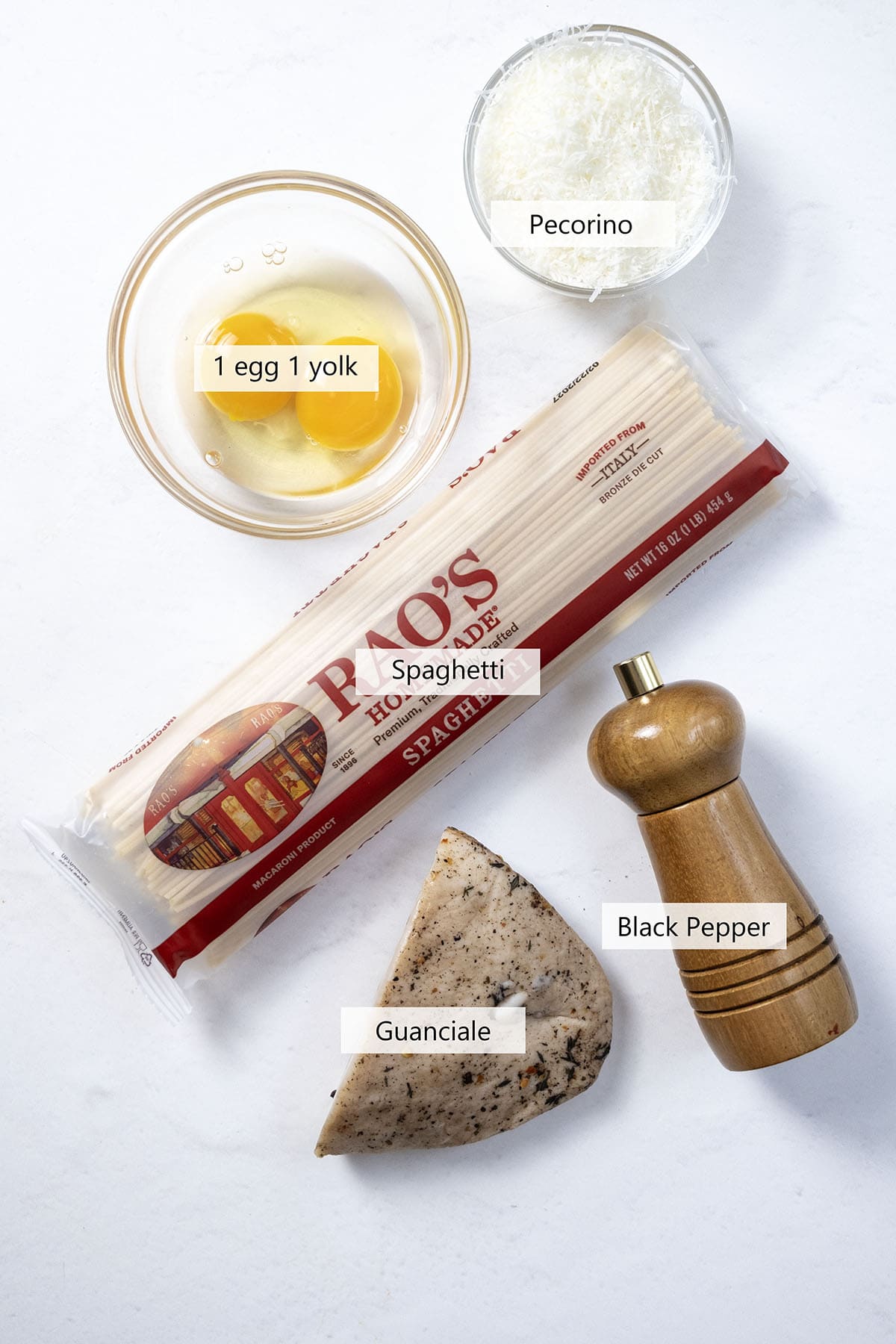
- Guanciale: Guanciale is the traditional pork used in carbonara. It is pork jowl and has a very rich flavor. Pancetta is a good substitute, which is pork belly, and is still rich but doesn't have the smoky flavor that bacon has. While some may say bacon is a good substitution, I disagree. The flavor of bacon will take over the dish and completely change the flavor profile.
- Black Pepper. Freshly cracked black pepper is essential in carbonara. It adds warmth, a subtle spice, and helps balance the richness of the other ingredients.
- Spaghetti. It's best to use dried pasta vs fresh for dishes like carbonara or pasta alla gricia. The starchiness will make a creamy and silky sauce. I choose a high-quality pasta that is bronze die cut and slow dried because it will release more starch into the pasta and hold sauce better than some mass-produced pasta.
- Eggs vs egg yolks. I use both whole eggs and egg yolks in my carbonara. The yolks add richness and help create that silky sauce, while the whites give the sauce a little more structure and help it emulsify with the starchy pasta water.
- Pecorino Romano: Pecorino Romano is the traditional Italian cheese used in carbonara. Always use freshly grated. Pre-grated cheese often contains anti-caking agents, which can cause the cheese to clump instead of creating a creamy sauce. The cheese will just clump up. Parmigiano Reggiano is a fair substitute, although it is not traditional.
*Please see the recipe card below for more information on ingredients.
How to Make Spaghetti Carbonara
Spaghetti carbonara is a difficult dish, but it can be made by following the simple directions below. It's not that a mistake will ruin the dish; it's just that a small error can mess with the consistency. Check out the Do's and Don'ts section following the instructions.

Step 1: Add the guanciale to the pan while the pan is cold. Raise the heat to medium and fry for about 8-10 minutes or until the guanciale is golden brown.
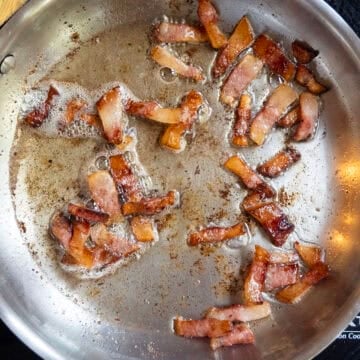
Step 2: While the guanciale is slowly rendering, boil your spaghetti in heavily salted water, saving at least 1 cup of pasta water. Stir the guanciale often to cook evenly. Once golden brown, remove the guanciale with a slotted spoon, leaving the rendered fat behind.
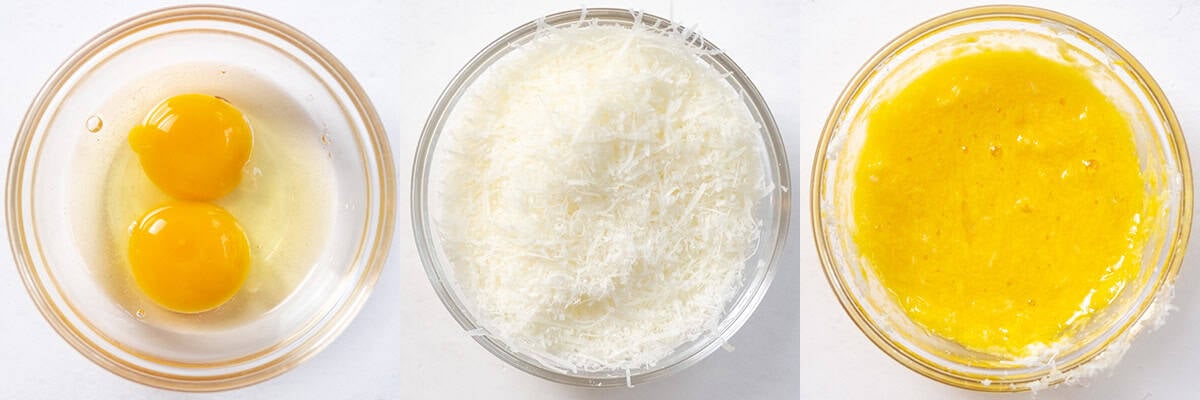
Step 3: Combine the egg, egg yolk, and pecorino and scramble together. I add 1 tablespoon of slightly cooled pasta water to this mixture to help temper it.
Pro Tip: I always use 1 egg yolk for every egg I add. This makes the carbonara perfectly creamy. The argument against using egg whites is that they cook more quickly than egg yolks. As long as you toss with the egg mixture off the heat, this shouldn't be a problem.
Pro-Tip: Make sure the pecorino is grated as small as possible for the best results. If it is too thick, it could coagulate in the sauce and get chunky.
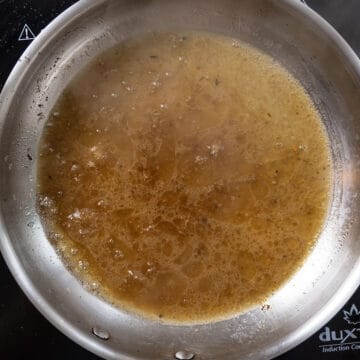
Step 4: Add ½ cup of the pasta water to the rendered fat in the saucepan and combine.
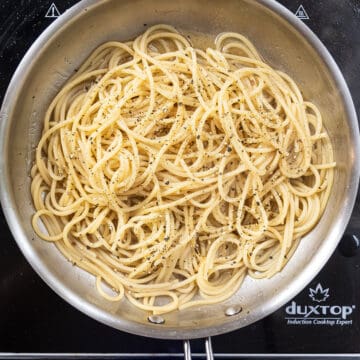
Step 5: Strain the pasta, saving another 1 cup of pasta water on the side. Add the pasta to the pan while it is still on the burner. Sprinkle with the black pepper and stir really well to combine.
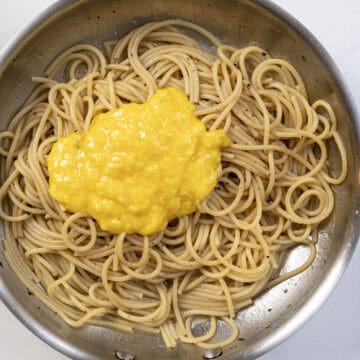
Step 6: Remove the pan from the heat for a minute. Let it cool slightly, then add the egg mixture and ¼ cup of pasta water to the pasta and stir vigorously. The sauce should develop into a creamy sauce. It will be loose at first, but keep stirring until it thickens.
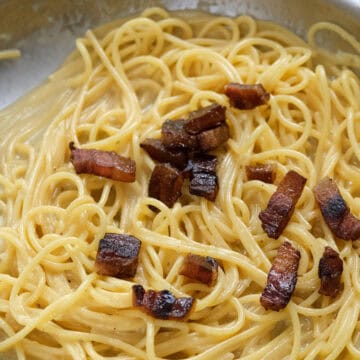
Step 7: Once the sauce is creamy and silky, return the guanciale to the pan and combine.
Pro Tip: It's important to remove the pasta from the pan immediately to avoid cooking the egg. You don't want to eat scrambled eggs and pasta.
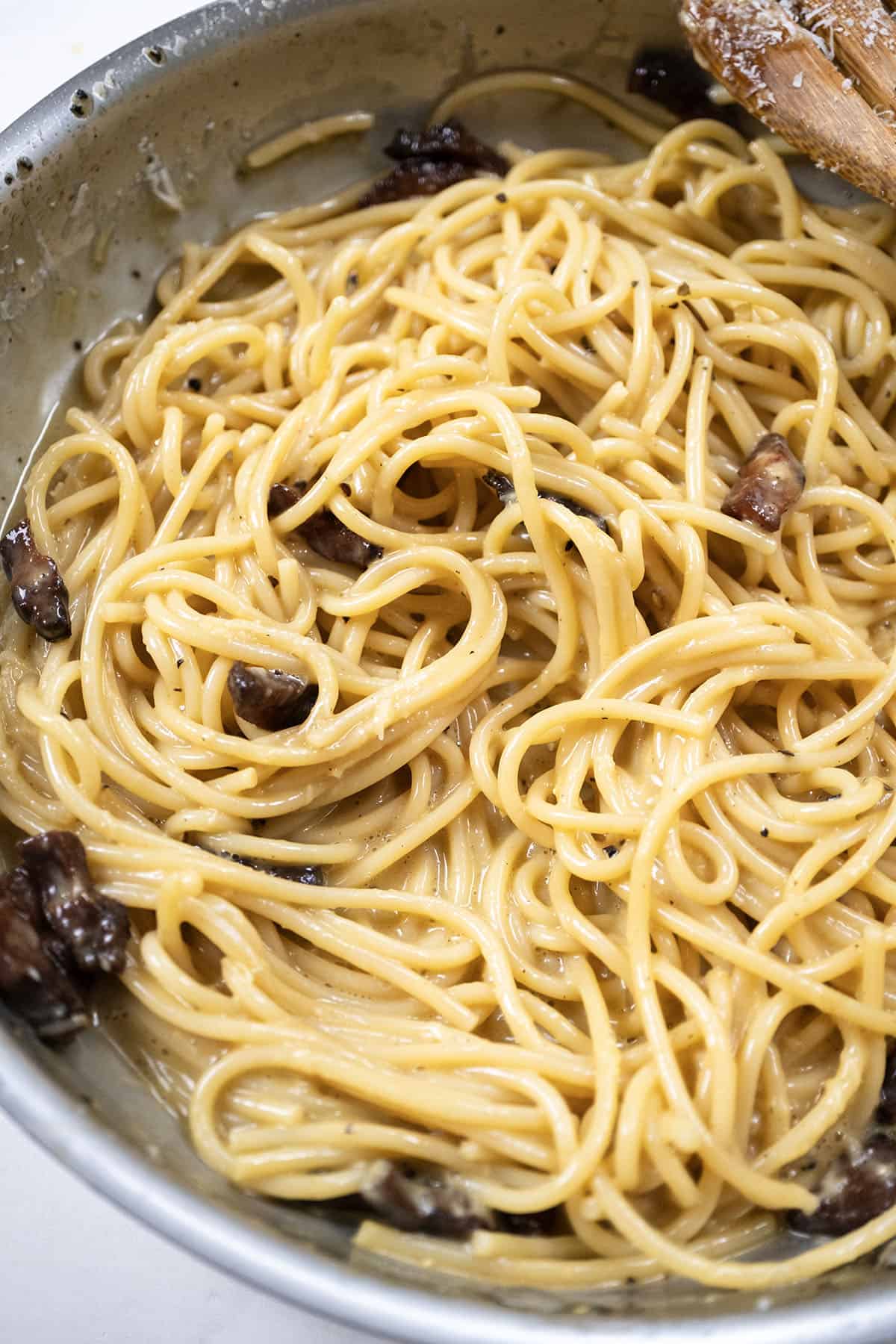
The picture above shows how the carbonara will be slightly loose before it turns into the creamy classic carbonara texture. Just stir until the moisture continues to evaporate and the mixture thickens.
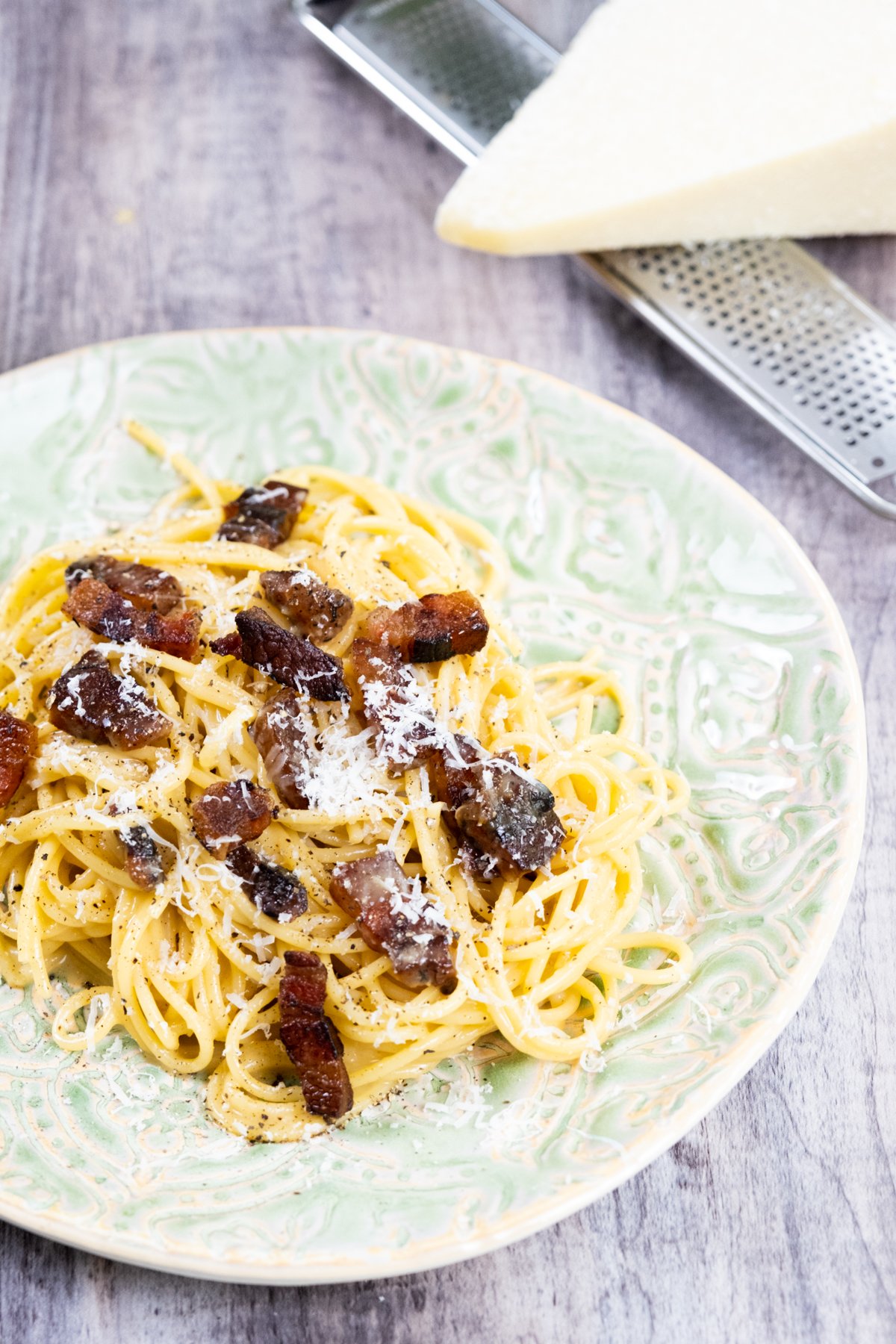
Carbonara is traditionally served as a primi or first course. You may want to serve a main dish like Italian Chicken Cutlets or Classic Pork Chop Milanese with a side of Italian vegetables like Sauteed Rapini with Garlic or Garlic Parmesan Green Beans after having carbonara.
Pro-Tips
- Guanciale and pancetta cook differently. Pancetta is much more forgiving than guanciale. I've cooked with both a ton of times, and I find I am way more likely to burn guanciale by being careless. Make sure you keep the heat of the saucepan under control with the guanciale, because it will brown very quickly in comparison to the pancetta. Stir often!
- When you're first learning to make carbonara, it can be helpful to cook it in a nonstick pan because it doesn't hold heat as well and will be more forgiving if the temperature gets too high.
- Always cook meat like guanciale or pancetta starting from a cold pan. This will help render the fat slowly while developing a crispy texture.
Spaghetti Carbonara Do's
- Start cooking the pancetta or guanciale as soon as you start bringing the water to a boil. The quanciale needs to finish cooking before the pasta finishes. If the pasta cools down too much, the egg mixture won't adhere to the pasta.
- Use a nonstick pan if you're a beginner. The nonstick won't hold heat as long as the cast iron or stainless steel pan. That will make it easier to drop the heat quickly if the pan is too hot when you add the egg mixture.
- Grate your pecorino romano using the smallest grater or microplane. The thicker the cheese is, the more likely it is to clump up.
- Use 1 egg yolk for every egg you use. It will make the sauce creamier.
- Take the pan off the heat when you stir in the egg and pecorino cheese mixture.
Spaghetti Carbonara Don'ts
- Don't use fake Parmesan or Pecorino Romano cheese. Buy one you have to grate yourself, and let it reach room temperature before adding it to the pasta. Pre-grated cheese contains anti-caking agents that make it more difficult to melt.
- Don't rinse your pasta. Don't let your pasta cool. Don't break your spaghetti. And don't forget to salt the water!
- Don't use a stainless steel pan if it's your first time. Non-stick pans can make it easier to lower the temperature when necessary.
- Don't add cream, milk, or butter. These are not traditional ingredients in a Roman Carbonara
- Don't substitute bacon for pancetta.
- Don't let the egg mixture ever sit still while it is in the pot with the pasta. Keep it moving until you transfer it to a plate.
Carbonara with Guanciale vs. Pancetta
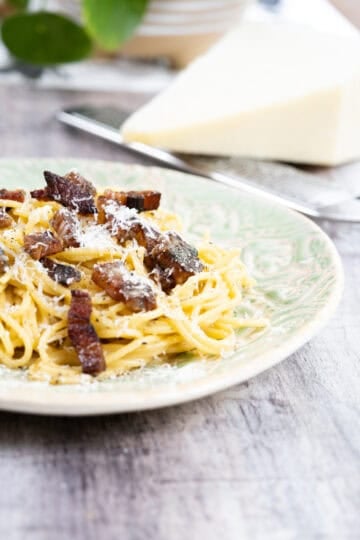
Carbonara with guanciale. Guanciale is much more tender, and the flavor is slightly sweeter than pancetta. The guanciale is authentic and definitely preferred for this dish, but pancetta is a great alternative.
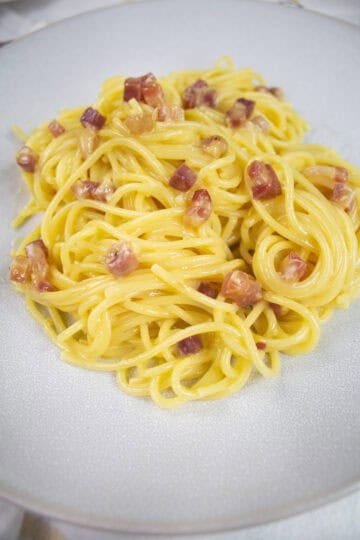
Carbonara with pancetta. Pancetta still gives us a great rendered fat to saute the spaghetti in, but the texture is slightly chewier and more savory than the guanciale. I still LOVE pancetta, and make carbonara with it often because I can just go and grab it at the supermarket. I usually have to order guanciale online.
Why Carbonara gets Clumpy
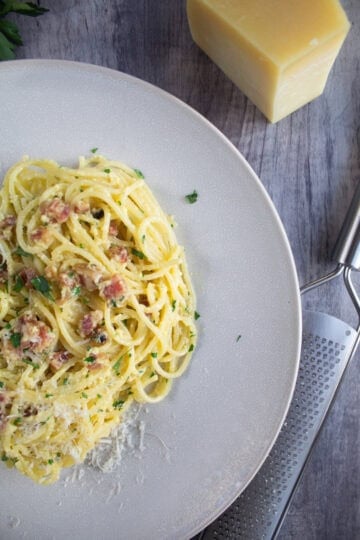
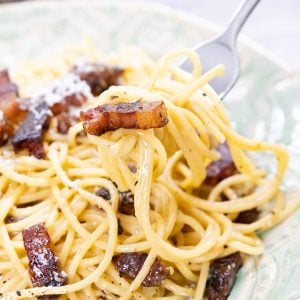
The egg and cheese mixture is pilling rather than forming a smooth sauce. This is exactly what we want to avoid when making carbonara. The egg and cheese mixture becomes a scrambled egg texture instead of the smooth, creamy, and silky texture shown in the images below.

This sauce has the smooth, silky texture we look for when we combine the egg and cheese mixture with the pasta.
Other Carbonara Mistakes
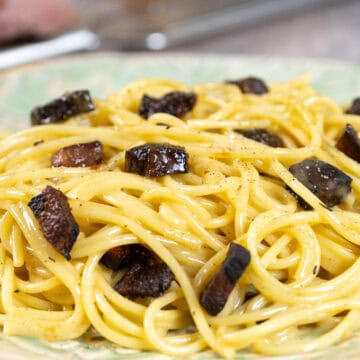
Burnt Guanciale. This guanciale was cooked too quickly. Make sure to start cooking from a cold pan and render the fat slowly while the guanciale turns golden brown.
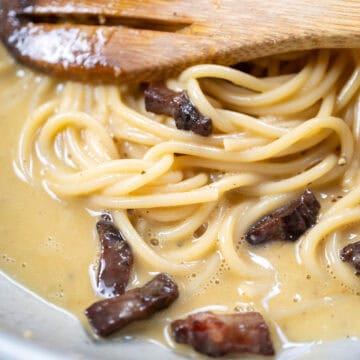
Too much pasta water. Here, I added too much pasta water. I was able to save this one by continuing to stir vigorously and adding more pecorino romano until most of the liquid evaporated.
Recipe FAQs
Guanciale is made from pork jowl and has a richer flavor with more fat, while pancetta is made from cured pork belly and tends to be slightly tougher with more sweetness to the meat when cooked.
The main difference is the animal from which each comes. Pecorino is from sheep milk, while Parmigiano is from cow's milk. Parmigiano is aged longer, so it is a little sweeter and has a nutty profile. Pecorino is softer and creamier and has a bit of tang in its flavor.
Don't put garlic, cream, milk, or butter. It is not needed. It is fine if you want to make a dish with those ingredients, but if you want to learn how to make this dish correctly, use only pecorino, eggs/egg yolks, black pepper, guanciale, and pasta water.
More Classic Italian Dishes
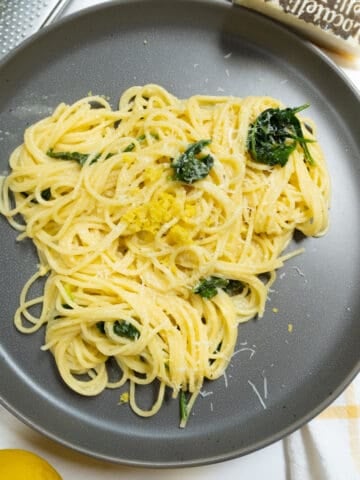
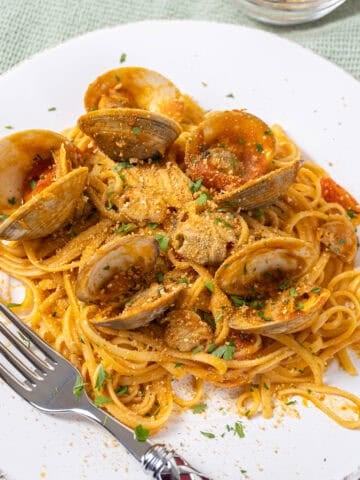
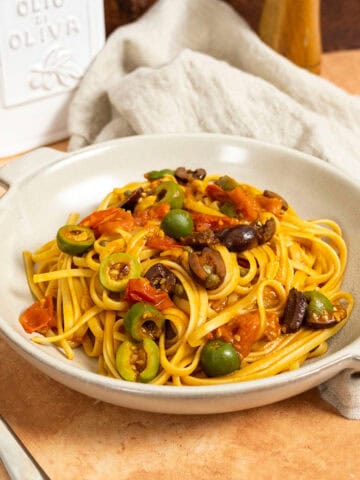
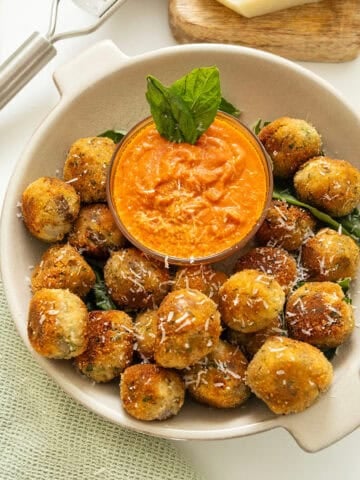
Please leave a comment and star rating below in the recipe card! I love to hear what you think of our recipes. Feel free to tag us on Instagram @vindelgiudice.
Save this Recipe So You Don't Forget it
Spaghetti Carbonara
Equipment
- 1 large saucepan
- 1 Small bowl
Ingredients
- 1 lb spaghetti
- 1 cup pecorino romano
- 2 eggs
- 2 egg yolks
- 6 oz guanciale, chopped
- ½ cup pasta water
- 1 teaspoon black pepper
Instructions
- Boil a large pot of water. Once at a boil, heavily salt the water. Cook spaghetti until al dente.
- Add the guanciale to the pan while the pan is cold. Raise the heat to medium and fry for about 8-10 minutes or until the guanciale is golden brown. Stir the guanciale often to cook evenly. Once golden brown, remove the guanciale with a slotted spoon, leaving the rendered fat behind.
- Combine the egg, egg yolk, and pecorino and scramble together. Add 1 tablespoon of slightly cooled pasta water to this mixture to help temper it.
- Strain the pasta, saving another 1 cup of pasta water on the side. Add the pasta to the pan while it is still on the burner. Sprinkle with the black pepper and stir really well to combine.
- Remove the pan from the heat for a minute. Let it cool slightly, then add the egg mixture and ¼ cup of pasta water to the pasta, stirring or tossing vigorously. The sauce should develop into a creamy sauce. It will be loose at first, but keep stirring until it thickens.
- Once the sauce is creamy and silky, return the guanciale to the pan and combine.
- Serve with extra pecorino romano!
Video
Notes
- Guanciale and pancetta cook differently. Pancetta is much more forgiving than guanciale. I've cooked with both a ton of times, and I find I am way more likely to burn guanciale by being careless. Make sure you keep the heat of the saucepan under control with the guanciale, because it will brown very quickly in comparison to the pancetta. Stir often!
- When you're first learning to make carbonara, it can be helpful to cook it in a nonstick pan because it doesn't hold heat as well and will be more forgiving if the temperature gets too high.
- Always cook meat like guanciale or pancetta starting from a cold pan. This will help render the fat slowly while developing a crispy texture.
- It's important to remove the pasta from the pan immediately to avoid cooking the egg. You don't want to eat scrambled eggs and pasta.
- I always use 1 egg yolk for every egg I add. This makes the carbonara perfectly creamy. The argument against using egg whites is that they cook more quickly than egg yolks. As long as you toss with the egg mixture off the heat, this shouldn't be a problem.
- Make sure the pecorino is grated as small as possible for the best results. If it is too thick, it could coagulate in the sauce and get chunky.
Christy says
I made a very dry Carbonara the other night, and I specifically was looking for advice on how to improve it. This detailed breakdown is extremely helpful! I can't wait to try it.
Rev Joseph says
Printed the recipe and followed it perfectly I was amazed at how well it turned out, I plan to make this more often now
Nicole epstein says
Delicious ! 10/10